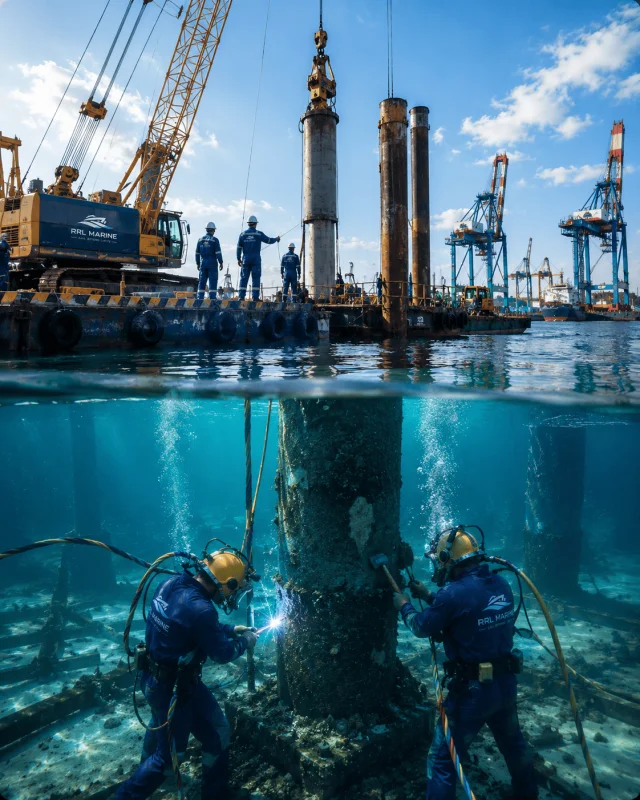
ROV Technology: The Future of Underwater Maritime Operations
Remotely Operated Vehicles (ROVs) are revolutionizing underwater inspection, maintenance, and repair in the maritime industry. From hull surveys to deep-sea pipeline inspections, ROV technology offers safer, faster, and more cost-effective solutions than traditional diving methods.
What is an ROV?
An ROV is an unmanned underwater robot controlled by an operator on the surface. Modern work-class ROVs are equipped with:
- High-definition (4K) cameras with LED lighting
- Sonar systems (multibeam, side-scan, forward-looking)
- Manipulator arms for intervention tasks
- Non-Destructive Testing (NDT) sensors
- Laser scaling for accurate measurements
Key Applications in Maritime
- Hull Inspection: Complete vessel hull survey without dry docking — saving time and money
- Offshore Platform Inspection: Structural integrity assessment at depths up to 3,000 meters
- Subsea Pipeline & Cable Survey: Route survey, burial assessment, and damage inspection
- Underwater Repair & Intervention: Valve operation, anode replacement, cutting, and welding
- Search & Salvage Operations: Locating and recovering sunken objects
Benefits Over Traditional Diving
- Safety: Eliminates human exposure to underwater hazards
- Depth Capability: Operates far beyond human diving limits (300m+)
- Endurance: 24/7 operations without decompression limits
- Data Quality: High-resolution video and sensor data for detailed analysis
- Cost Efficiency: Reduced vessel time compared to diving operations
RRL Marine ROV Services
RRL Marine operates a fleet of work-class and inspection-class ROVs serving clients across Indonesia and Southeast Asia. Our ROV services are IMCA-compliant and operated by certified ROV pilot technicians.
Contact us for a free consultation on how ROV technology can benefit your underwater inspection needs.